
Laser Weeder & Smarta Ogräsbekämpningssystem Jämförelse 2026
Jämför 8 laser weeder och smarta ogräsbekämpningslösningar. Från traktorburna redskap till autonoma robotar — utvärdera ledare som Carbon Robotics, Escarda, WeedBot, Trabotyx och nya aktörer.
Toppval
Carbon Robotics G2 200
Carbon Robotics · Commercial 2021
Proven track record with 30+ units deployed globally.
Terra Robotics Terracore
Terra Robotics · Commercial 2025
European design, compact and lighter than leader.
PixelFarming Robot One
PixelFarming · First Pilots 2025
Fully autonomous operation (no tractor needed).
Fullständig jämförelse
G2 600
Carbon Robotics
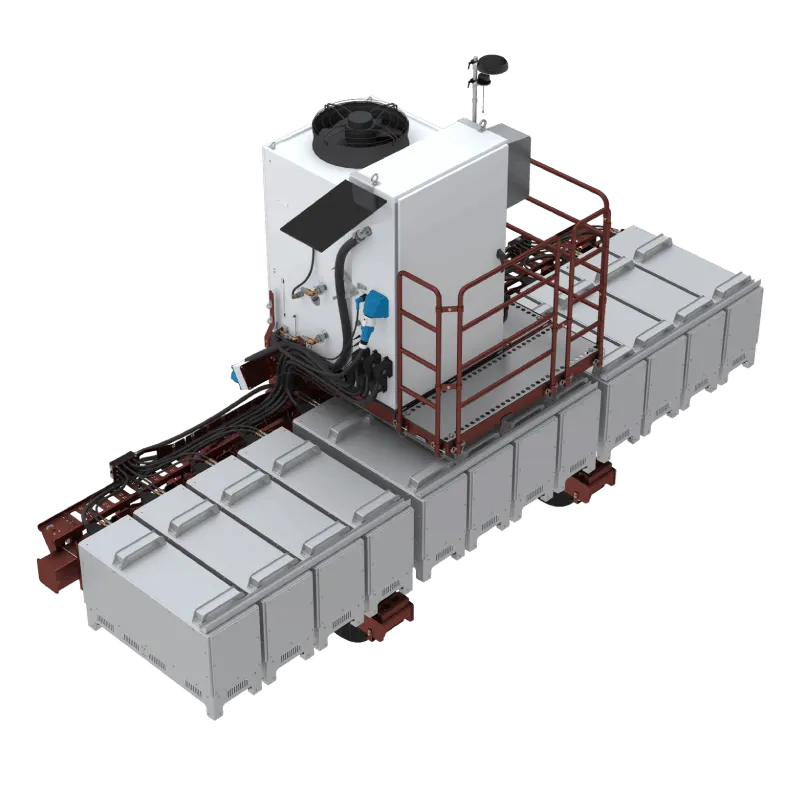
- ✓Proven track record with 100+ units deployed globally
- ✓Widest working width range (2-12m modular)
- ✓Supports 150+ crop types
- ✓Strong AI-based weed detection
- ✓Direct sales with local support teams
- ✓High customer satisfaction on performance
- ✓Reliability and maintenace free laser technology
- ⚠Highest price point in market ($250k/m)
- ⚠Mandatory annual subscription ($50-120k)
- ⚠Very heavy equipment requires powerful tractor
- ⚠Premium pricing frustrates some customers
- ⚠Locked into proprietary ecosystem
- ⚠Non-foldable and bulky system
- ⚠High capital needs → investors prioritized over farmers priorities
G2 200
Carbon Robotics
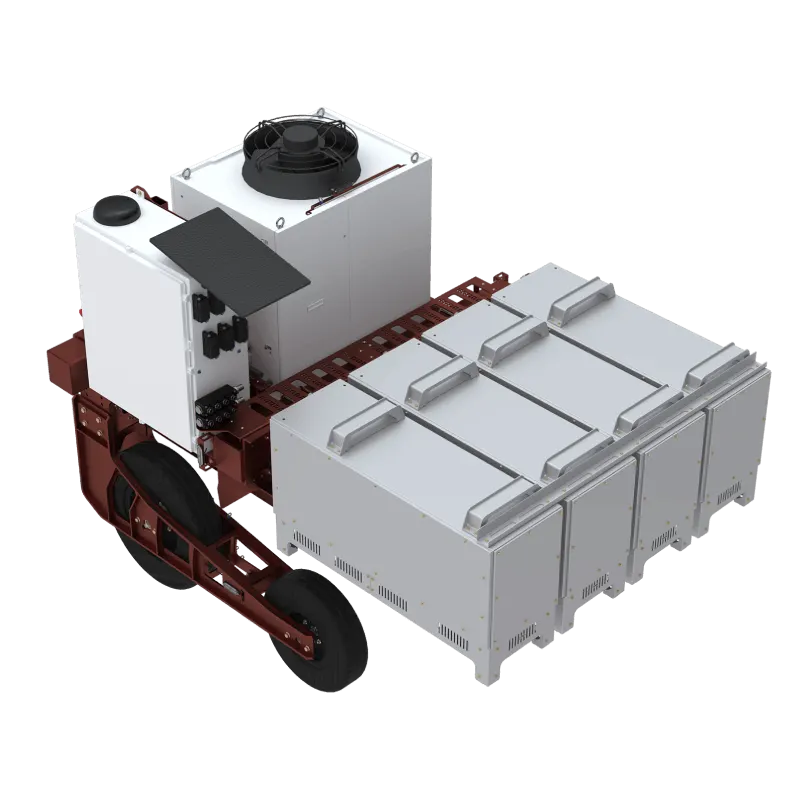
- ✓Proven track record with 30+ units deployed globally
- ✓Widest working width range (2-12m modular)
- ✓Supports 150+ crop types
- ✓Strong AI-based weed detection
- ✓Direct sales with local support teams
- ✓High customer satisfaction on performance
- ⚠Highest price point in market (€250k/m)
- ⚠Mandatory annual subscription (€50-120k)
- ⚠Very heavy equipment requires powerful tractor
- ⚠Premium pricing frustrates some customers
- ⚠Locked into proprietary ecosystem
- ⚠Non-foldable and bulky system
Terracore
Terra Robotics
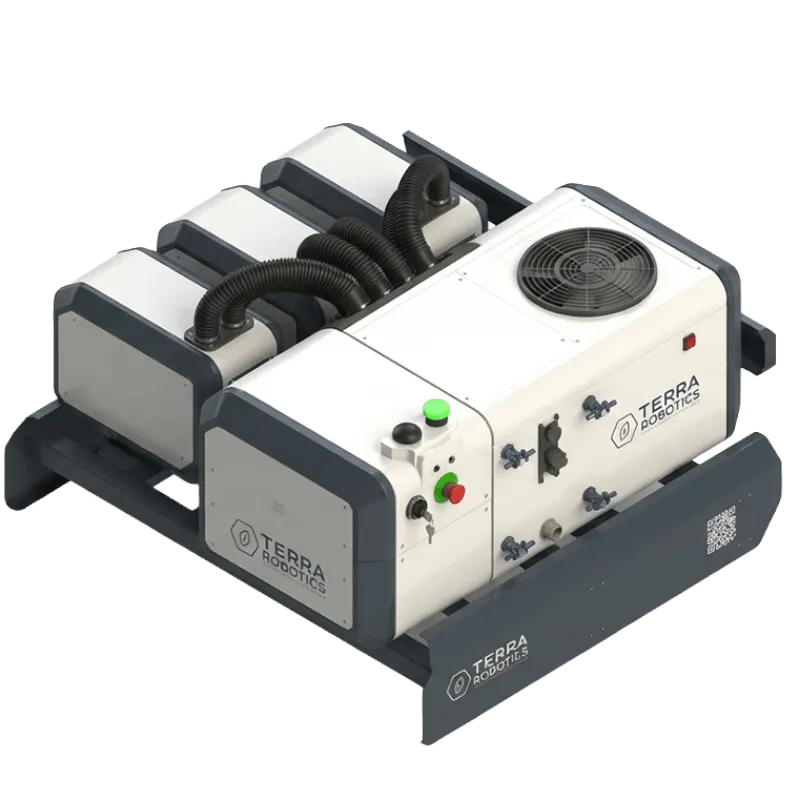
- ✓European design, compact and lighter than leader
- ✓Reliability and maintenace free laser technology, like leader
- ✓Lower tractor power requirements, no generator in the front
- ✓Competitive pricing for EU market
- ✓Modular plug-and-play design for easy maintenance
- ✓Direct sales with local EU support
- ✓Customer satisfaction from first 2025 pilots
- ⚠Very limited public technical specifications
- ⚠Fewer than 5 units deployed
- ⚠Unproven track record in various field
- ⚠Narrow crop focus compared to competitors
- ⚠Limited geographic presence
- ⚠New market entrant with unknown reliability
- ⚠Still a small company with uncertain future
Flex System
Escarda
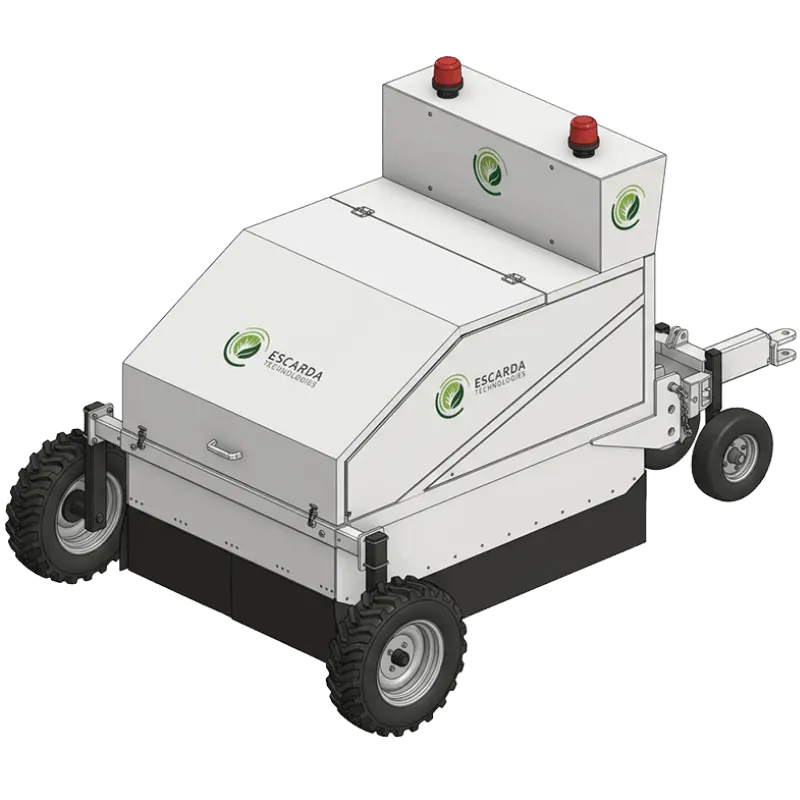
- ✓Modular plug-and-play design for easy maintenance
- ✓Quick laser box replacement in field
- ✓Already some dealer network (Stecomat FR, Homburg NL)
- ✓Partnership with major US tomato grower (Morningstar)
- ✓Competitive mid-range pricing
- ✓Lightweight compared to leader
- ✓Associated to an industrial laser company
- ⚠Certification delays impacted market entry
- ⚠Limited funding (<1M€ raised)
- ⚠Fewer than 5 units deployed
- ⚠Difficulty to develop new crops AI model
- ⚠Dependent on dealer network for sales
- ⚠Unproven long-term reliability
- ⚠Struggling to fully deliver first units
Lumina
Weedbot
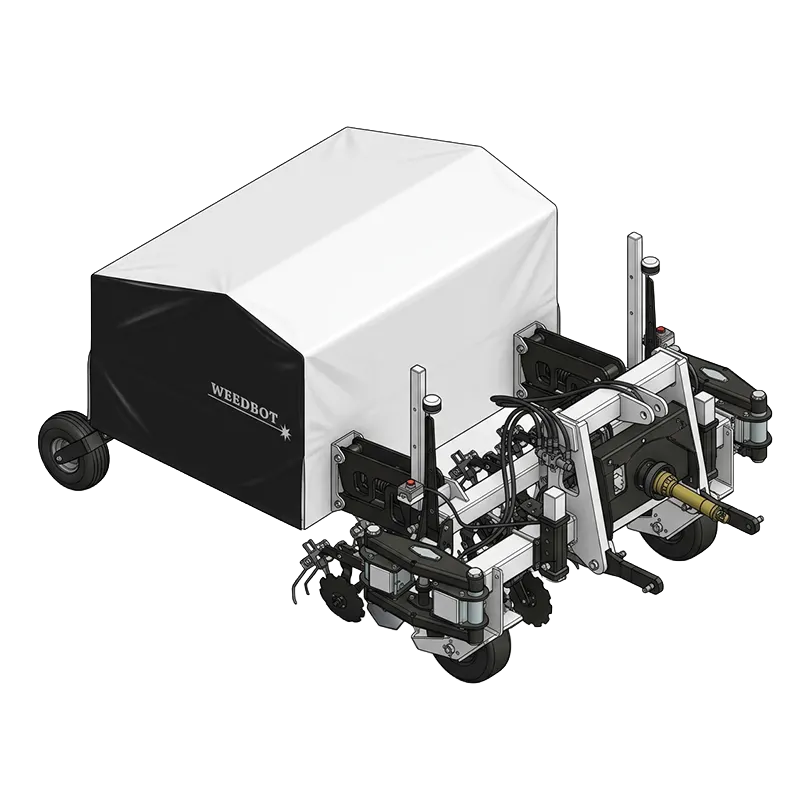
- ✓One of the leader's first competitors
- ✓Lighter weight than leader
- ✓Direct sales with local EU support
- ✓One machine in operation in Belgium
- ✓Good experience in carrots
- ⚠Partner KULT bankruptcy creates uncertainty
- ⚠Blue light diode laser are efficient but dangerous for the retina
- ⚠Very few information about the technology and prices
- ⚠Very limited crop support (mainly carrots)
- ⚠Unproven reliability and performance
- ⚠Limited technical specifications available
- ⚠Small company with uncertain future
Robot One
PixelFarming
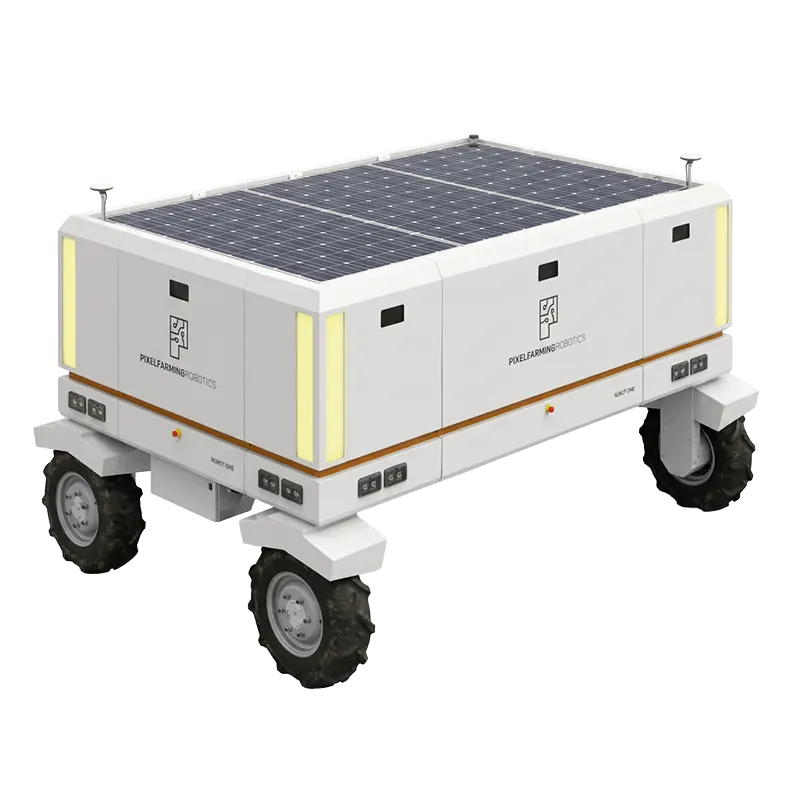
- ✓Fully autonomous operation (no tractor needed)
- ✓Broad crop support (6 crop types)
- ✓Scalable platform (2m and 5m versions)
- ✓No operator required during operation
- ✓Future-proof autonomous technology
- ✓Lower operationnal costs because fully electrified
- ⚠CO2 Laser technology quickly loses effectiveness
- ⚠Lack of robots reliability and logistic constrains
- ⚠6m version still under development
- ⚠Fewer than 5 units deployed
- ⚠Higher upfront cost than implements
- ⚠Requires field infrastructure (charging, RTK base)
- ⚠Autonomy and robustness of electric vehicles
- ⚠Small company with uncertain future
Tor
Trabotyx
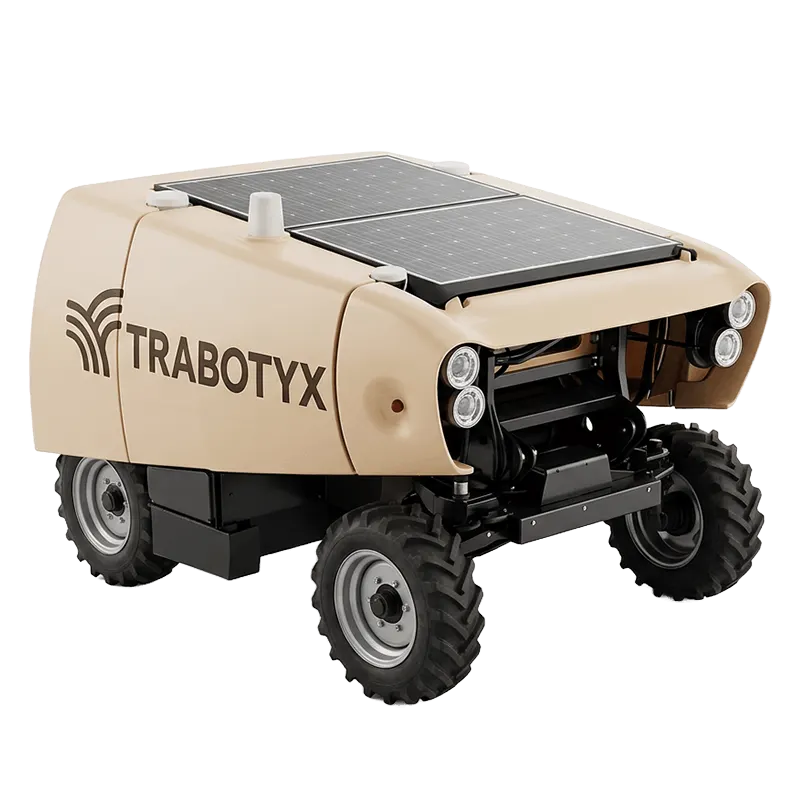
- ✓Attractive mid-range pricing (€214-349k)
- ✓Fully autonomous operation (no tractor needed)
- ✓Close to Dutch market (local support)
- ✓Modular system with multiple widths
- ✓Pro 3m version for larger operations
- ✓Good automation capabilities
- ✓Lower operationnal costs because fully electrified
- ⚠Blue light diode laser are efficient but dangerous for the retina
- ⚠Requires field infrastructure (charging, RTK base)
- ⚠Autonomy and robustness of electric vehicles
- ⚠Still in validation phase (not fully commercial)
- ⚠Fewer than 5 units deployed
- ⚠Lack of robots reliability and logistic constrains
- ⚠Higher upfront cost than implements
- ⚠Small company with uncertain future
L&Aser™ Module
L&A
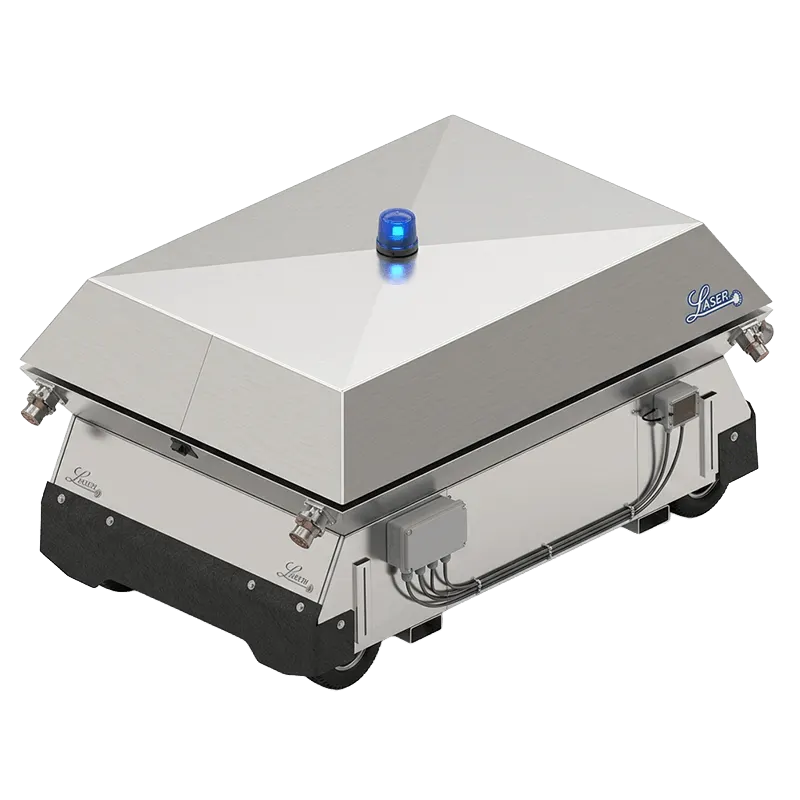
- ✓Bootstrapped company
- ✓Open-source laser (Apr 2025)
- ✓Official and clear price displayed
- ✓All information available on the website
- ✓Possibility to buy the laser boxes directly online
- ⚠Blue light diode laser are efficient but dangerous for the retina
- ⚠Lawsuit by leader in Oct 2024, Capital challenges
- ⚠Expatriate company in Australia
- ⚠Not allowed to sell product in USA
- ⚠Some doubts about the ability to provide after-sales service
Vad är laserogräsbekämpning?
Laserogräsbekämpning är en precisionsjordbruksteknik som använder högeffektslasrar och AI för att eliminera ogräs utan herbicider. Datorseende identifierar varje ogräs i realtid; en fokuserad laserpuls förstör sedan meristmet (tillväxtpunkten) inom millisekunder — dödar ogräset utan att skada grödan.
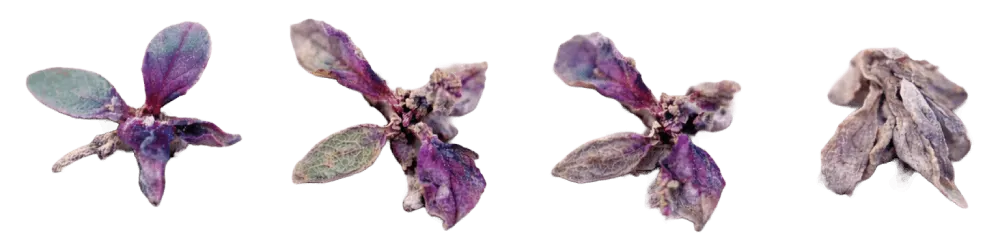
Millimeterprecision
AI detekterar och riktar in sig på ogräs från 2 mm utan att skada grödorna
Kemikaliefri
Noll herbicider, säker för ekologiskt jordbruk och miljön
Hög kapacitet
Systemen eliminerar upp till 100 000 ogräs per timme vid hastigheter upp till 8 km/h
Hur fungerar laserogräsbekämpning?
Ett laserogräsbekämpningssystem monteras på en traktor eller arbetar autonomt och skannar kontinuerligt grödoraden med kameror. En AI-modell — tränad på miljontals märkta växtbilder — identifierar varje ogräs inom millisekunder. Systemet riktar sedan en fokuserad högeffektslaser (typiskt 20–240 W) mot ogräsets meristem, tillväxtpunkten strax under jordytan. Lasern förstör meristemcellerna genom värme, vilket förhindrar återtillväxt utan att störa jorden eller lämna kemiska rester.
Hur effektiv är laserogräsbekämpning?
Kommersiella system uppnår ogräseliminering på upp till 99% under fältförhållanden. Ledande implementeringar eliminerar över 100 000 ogräs per timme vid fälthastigheter på 5–8 km/h. Refereegranskade studier bekräftar att meristem-targeting effektivt undertrycker återtillväxt hos över 100 grödarter. Lantbrukare rapporterar 60–80% minskningar av herbicidkostnader och jämförbar eller bättre ogräskontroll jämfört med konventionella kemiska program.
Laserogräsbekämpning vs. Herbicider
Laserogräsbekämpning erbjuder flera strukturella fördelar jämfört med herbicidbaserad ogräskontroll:
- ✓Inga kemiska rester — kvalificerar för ekologisk certifiering
- ✓Ingen herbicidresistensutveckling — ogräs kan inte anpassa sig till laservärme
- ✓Ingen jordstörning — bevarar jordmikrobiomet och jordstrukturen
- ✓Drift 24/7 inklusive natt — inte väderberoende som besprutning
- ✓Inga karenstider — traktorer kan omedelbart köra in på fälten
Avvägning: högre initial investeringskostnad ($150 000–$1 500 000) mot löpande herbicidutgifter på ~$125–500/ha/år.
Se laserogräsbekämpning i aktion
Jämförelse av laserteknik
Allmän teknikjämförelse: blå diod, CO2 och klassisk diodlaser.
| Kriterium | Blå diod (~445-465 nm) | CO2 (~10 600 nm) | Klassisk diod (~650-915 nm) |
|---|---|---|---|
| Weed control effectiveness | ✅ Very high (optimal absorption by plant tissue) | ✅ Very high (absorbed by water in plants) | ⚠️ Variable, less effective → may require higher power |
| Energy efficiency | ✅ Very good (30–40%+) | ❌ Low (~10–20%) | ✅ Good, similar to blue diode |
| Robot / mobile compatibility | ✅ Excellent (compact, easy to integrate) | ❌ Poor (bulky, heavy cooling system) | ✅ Very good (compact, reliable) |
| Robustness / lifespan | ✅ Good, few moving parts | ✅ Very stable but sensitive to vibrations | ✅ Excellent, mature technology |
| Eye safety | ⚠️ High retinal risk, even diffuse reflection can cause damage | ⚠️ Invisible beam, absorbed by cornea → still serious risk | ❌ Retinal risk in direct vision, or by reflection |
| Cost / availability | ⚠️ More expensive than red, but accessible | ❌ Very expensive, rare | ✅ Low cost, widely available |
| Cooling / maintenance | ✅ Simple | ❌ Complex, often requires active cooling | ✅ Simple and reliable |
Hur man väljer en Laser Weeder
Redskap vs. Robot
Traktorburna redskap (Carbon Robotics, Escarda, WeedBot, Trabotyx) passar befintliga maskinparker och kontrollerade radavstånd. Autonoma robotar (PixelFarming, Earth Rover) erbjuder handsfree ogräsbekämpning men befinner sig i ett tidigare skede. Laserleverantörer (Luxeed, L&A) riktar sig mot OEM och specialbyggen.
- ✓Redskap: Carbon, Escarda, WeedBot, Trabotyx
- ✓Robotar: PixelFarming, Earth Rover
- ✓Laserleverantörer: Luxeed, L&A
Total ägandekostnad
Beakta inköpskostnad, årlig prenumeration (om tillämpligt) och bredd/produktivitet. Carbon leder med premiumpris och skala; EU-alternativ som Escarda och Trabotyx erbjuder lägre inträdespriser.
Kostnadsjämförelse
Inköps- och prenumerationspriser (indikativa)
| System | Hårdvara / Pris | Prenumeration |
|---|---|---|
Carbon Robotics G2 600 Commercial 2018 | Around 1,500,000€ | 60k-100k€/year |
Carbon Robotics G2 200 Commercial 2021 | Around 600,000€ | 40k-60k€/year |
Terra Robotics Terracore Commercial 2025 | Around 300K€ | Subscription (No info) |
Escarda Flex System Commercial 2025 | Around 300k€ | Suscription (No info) |
Weedbot Lumina Commercial 2025 | Around 300 – 350k€ | Suscription (No info) |
PixelFarming Robot One First Pilots 2025 | Around $355k | Subscription (No info) |
Trabotyx Tor First Pilot 2026 | Around 300k€ | 20.9k€/year |
L&A L&Aser™ Module Commercial 2026 | Around 20k€ per laser box | — |
Verkliga resultat
Hör från lantbrukare som har integrerat laserogräsbekämpning i sin verksamhet och uppnått mätbar avkastning.
Tripod Farmers
Australia's leading salad company
"We have implemented the LaserWeeder on a New Holland tractor T7.210 with 165 horsepower. In 5 hours of use, we have weeded 5 acres and eliminated 800,000 weeds. We have been using this weeder in different types of lettuce, kale, red and green corals, bottle lettuce and it's been working very good!"
Vezyroglou Farm
Greece's leader in high-quality leafy greens (100 ha/year)
"The TerraWeeder CORE proved its value within the first month. After few weeks our operators were already used to the machine. At Vezyroglou Farm, three crops were added in one month, leading to a 50–70% reduction in weeds and, in some areas, the complete elimination of manual labor."
Braga Fresh
Californian family business, Salinas Valley
"We were among the first to invest in a Carbon Robotics V1 machine. Despite its high upfront cost, we were able to fully recoup the investment within two years by using it year-round across more than 500 hectares. Today, this technology allows us to diversify our operation: like introducing carrots, a crop that were not viable before acquiring the machine."
Två decennier av forskning om laserogräsbekämpning
Från grundläggande biologiska studier till kommersiella fältförsök: utforska de viktigaste vetenskapliga genombrotten som förvandlade laserogräsbekämpning från laboratoriekuriositet till en användbar jordbruksteknik. Klicka på valfritt år för att fördjupa dig i forskningen.
Viktiga forskningsinsikter
Open source-projekt för laserogräsbekämpning
För utvecklare, forskare och teknologer som vill bygga egna system för laserogräsbekämpning eller bidra till området. Dessa repositories innehåller kod, dataset och ramverk för olika delar av tekniken.
L&ASER
Product-levelLaudando-Associates-LLC
Open-source releases for the "L&ASER" laser weeder project (dual-licensed). Provides core project components of a laser weeding system — perception/control modules rather than a complete DIY build.
View on GitHub →WeedStemDetection
AI/Perceptionopen-sciencelab (AAAI 2025)
Research code for weed stem detection designed specifically for intelligent laser weeding. Detects the precise weed stem location so a laser can accurately burn/cut the plant at the optimal point.
View on GitHub →Open-Weeding-Delta
Full StackAgroecology-Lab
A ROS2-based autonomous weed removal robot project. Provides a complete robotics framework that performs weed detection/segmentation and triggers actuators (mechanical or laser).
View on GitHub →Project-Cyclops
Platform-specificrahularepaka
A laser attachment for FarmBot Genesis (v1.3). Turns a FarmBot into a laser weed removal prototype with a 500 mW laser module. Platform-specific proof-of-concept for integrated perception + laser actuation.
View on GitHub →OpenWeedLocator
Entry-levelgeezacoleman
An open-source weed detection system (Raspberry Pi-based). Detects weeds (green-on-brown scenarios) and triggers an external device. Not laser-specific, but could trigger a laser driver instead of a spray solenoid.
View on GitHub →robot-weed-killer
Control LayerSalisbury-University
A control application for a laser-firing weed-killing robot. Coordinates movement and triggers the laser — primarily the control/actuation layer rather than a machine learning project.
View on GitHub →OpenSourceAgriculture
Resource Indexgeezacoleman
A curated list of open-source agriculture projects and datasets. Helps discover additional robotics, precision agriculture, and weed-related repositories. Not an actual weeding system, but a valuable discovery resource.
View on GitHub →Vanliga frågor
Vem är marknadsledare inom laserogräsbekämpning?
Carbon Robotics är den etablerade ledaren med kommersiell försäljning sedan 2021, cirka 200 enheter globalt (Nordamerika, EU, Australien) och ett brett G2-sortiment från 2 m till 18 m. Terra Robotics och Escarda Technologies är starka utmanare i EU.
Vilka grödor stöds?
Carbon Robotics stöder över 150 grödor inklusive specialgrönsaker, örter och ekologisk majs och soja. EU-fokuserade system riktar sig ofta mot lök, morötter, sockerbetor, spenat, tomater och bladgrönsaker. Kontrollera med varje leverantör för din gröda.
Redskap vs. autonom robot?
Redskap (traktorburna) finns kommersiellt tillgängliga från Carbon, Escarda, WeedBot och Trabotyx. Helt autonoma robotar (t.ex. PixelFarming Robotics, Earth Rover) befinner sig i validerings- eller tidig kommersialiseringsfas. Välj redskap för bevisad kapacitet och befintliga traktorer; robotar för framtida autonomi.
Vilka tekniker används i laserogräsbekämpning?
System för laserogräsbekämpning kombinerar flera tekniker: högeffekts CO2- eller diodlasrar (vanligtvis 20-150 W per laser), AI-baserad datorseende för ogräsdetektion, bildbehandling i realtid, precisionsriktning och GPS/RTK-navigering. Vissa system använder termisk avbildning för att verifiera ogräseliminering. Nyckelinnovationen är AI som skiljer mellan gröda och ogräs på millisekunder.
Vad kostar laserogräsbekämpning?
Initiala kostnader varierar från cirka 150 000-200 000 EUR för 2 m-instegsredskap (Terra Robotics, Escarda, WeedBot) till över 500 000 USD för premiumsystem som Carbon Robotics 6 m G2. Många system kräver årliga prenumerationer (50 000-120 000 USD för Carbon). ROI ligger ofta på 2-4 år beroende på gårdsstorlek, grödvärde och arbetskostnader. Använd ROI-kalkylatorn ovan för ditt specifika scenario.
Hur säkra är system för laserogräsbekämpning?
Moderna system för laserogräsbekämpning har flera säkerhetsfunktioner: inkapslade laserhus, automatisk avstängning när skydd öppnas, nödstopp och säkerhetslåsningar. Lasrarna riktas nedåt mot marken och är inneslutna i skyddande kåpor. Operatörer bör följa tillverkarens säkerhetsrutiner och använda lämpligt ögonskydd vid service.
Fungerar laserogräsbekämpning i alla väderförhållanden?
Laserogräsbekämpning fungerar bäst i torra förhållanden. Kraftigt regn, dimma eller mycket damm kan minska effektiviteten eftersom det stör laserstrålen och kamerasystemen. De flesta system kan arbeta vid lätt fukt, men rekommenderas inte vid kraftigt regn. Nattdrift är möjlig med rätt belysning för visionsystemet. Vind påverkar i allmänhet prestandan lite.
Vilket underhåll kräver system för laserogräsbekämpning?
Regelbundet underhåll omfattar rengöring av kameralinser och laseroptik (dagligen i dammiga förhållanden), kontroll av laserinriktning, inspektion av elektriska anslutningar och programuppdateringar. Lasermoduler håller vanligtvis i över 10 000 timmar men kan behöva bytas över tid. De flesta tillverkare erbjuder serviceavtal och fjärrdiagnostik. Budgetera 5-10 % av inköpspriset per år för underhåll och support.
Redo att utforska laserogräsbekämpning?
Berätta om din gård så kopplar vi dig till rätt lösning för laserogräsbekämpning - gratis och förutsättningslös expertrådgivning.
Få expertråd
Our team will help you find the right laser weeding system for your farm.