
Laser Weeder & Smart Weeding Systems Comparison 2026
Compare 8 laser weeder and smart weeding solutions. From tractor-mounted implements to autonomous robots—evaluate leaders like Carbon Robotics, Escarda, WeedBot, Trabotyx, and emerging players.
Top Picks
Carbon Robotics G2 200
Carbon Robotics · Commercial 2021
Proven track record with 30+ units deployed globally.
Terra Robotics Terracore
Terra Robotics · Commercial 2025
European design, compact and lighter than leader.
PixelFarming Robot One
PixelFarming · First Pilots 2025
Fully autonomous operation (no tractor needed).
Full Comparison
G2 600
Carbon Robotics
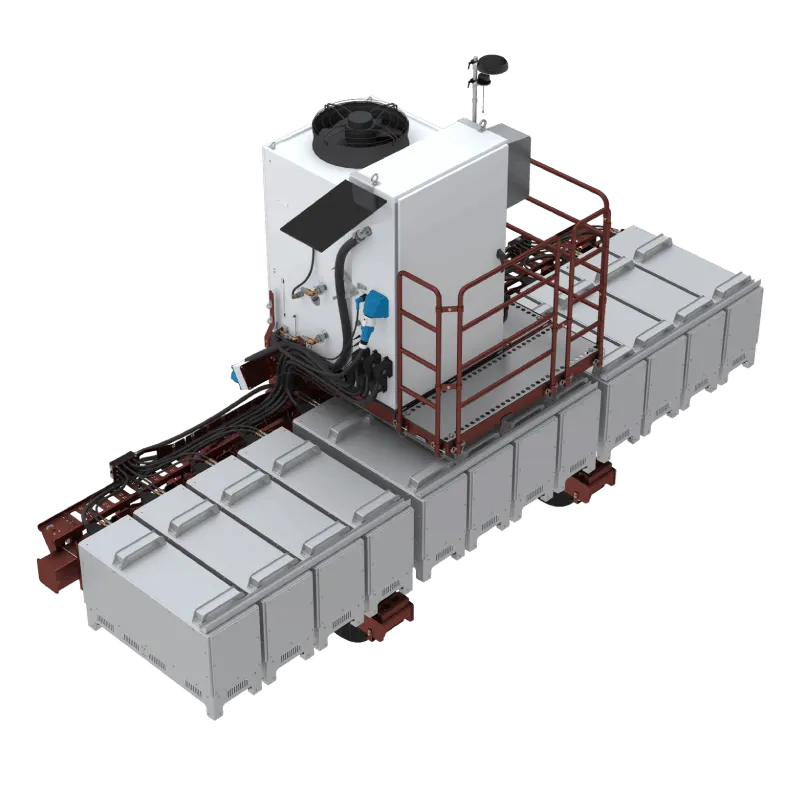
- ✓Proven track record with 100+ units deployed globally
- ✓Widest working width range (2-12m modular)
- ✓Supports 150+ crop types
- ✓Strong AI-based weed detection
- ✓Direct sales with local support teams
- ✓High customer satisfaction on performance
- ✓Reliability and maintenace free laser technology
- ⚠Highest price point in market ($250k/m)
- ⚠Mandatory annual subscription ($50-120k)
- ⚠Very heavy equipment requires powerful tractor
- ⚠Premium pricing frustrates some customers
- ⚠Locked into proprietary ecosystem
- ⚠Non-foldable and bulky system
- ⚠High capital needs → investors prioritized over farmers priorities
G2 200
Carbon Robotics
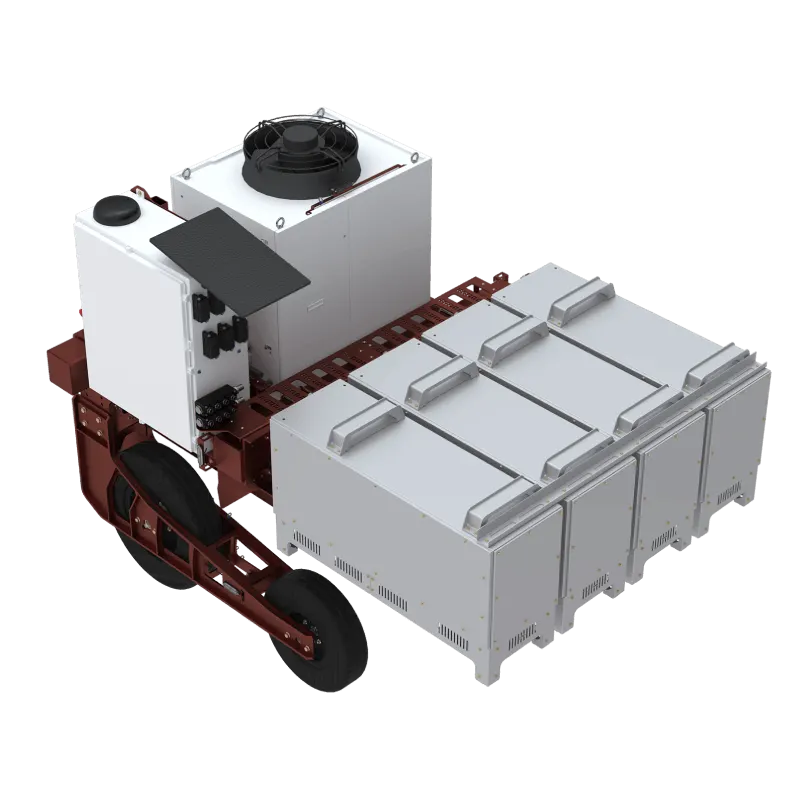
- ✓Proven track record with 30+ units deployed globally
- ✓Widest working width range (2-12m modular)
- ✓Supports 150+ crop types
- ✓Strong AI-based weed detection
- ✓Direct sales with local support teams
- ✓High customer satisfaction on performance
- ⚠Highest price point in market (€250k/m)
- ⚠Mandatory annual subscription (€50-120k)
- ⚠Very heavy equipment requires powerful tractor
- ⚠Premium pricing frustrates some customers
- ⚠Locked into proprietary ecosystem
- ⚠Non-foldable and bulky system
Terracore
Terra Robotics
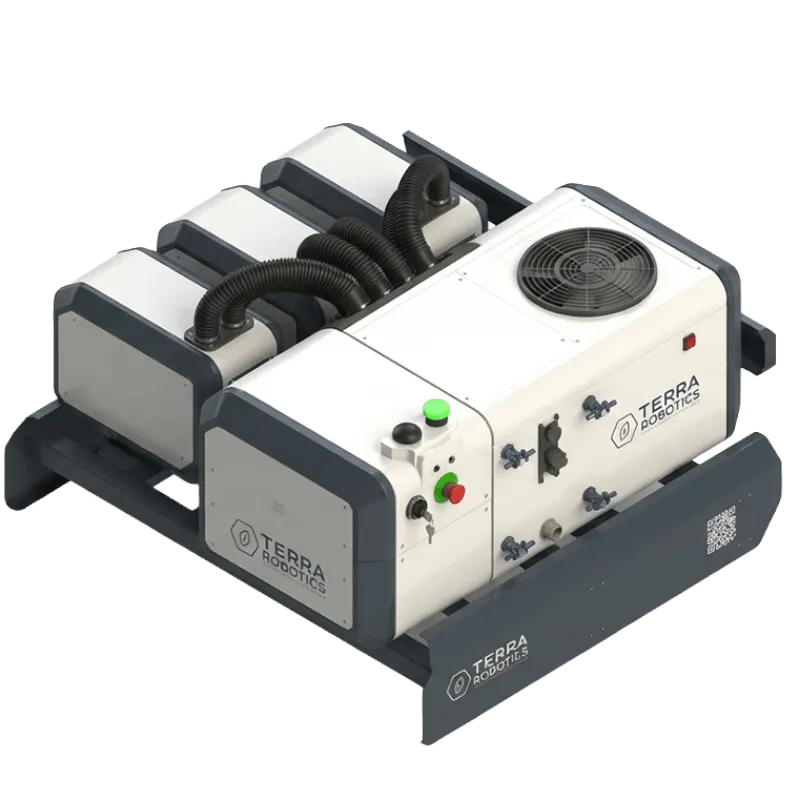
- ✓European design, compact and lighter than leader
- ✓Reliability and maintenace free laser technology, like leader
- ✓Lower tractor power requirements, no generator in the front
- ✓Competitive pricing for EU market
- ✓Modular plug-and-play design for easy maintenance
- ✓Direct sales with local EU support
- ✓Customer satisfaction from first 2025 pilots
- ⚠Very limited public technical specifications
- ⚠Fewer than 5 units deployed
- ⚠Unproven track record in various field
- ⚠Narrow crop focus compared to competitors
- ⚠Limited geographic presence
- ⚠New market entrant with unknown reliability
- ⚠Still a small company with uncertain future
Flex System
Escarda
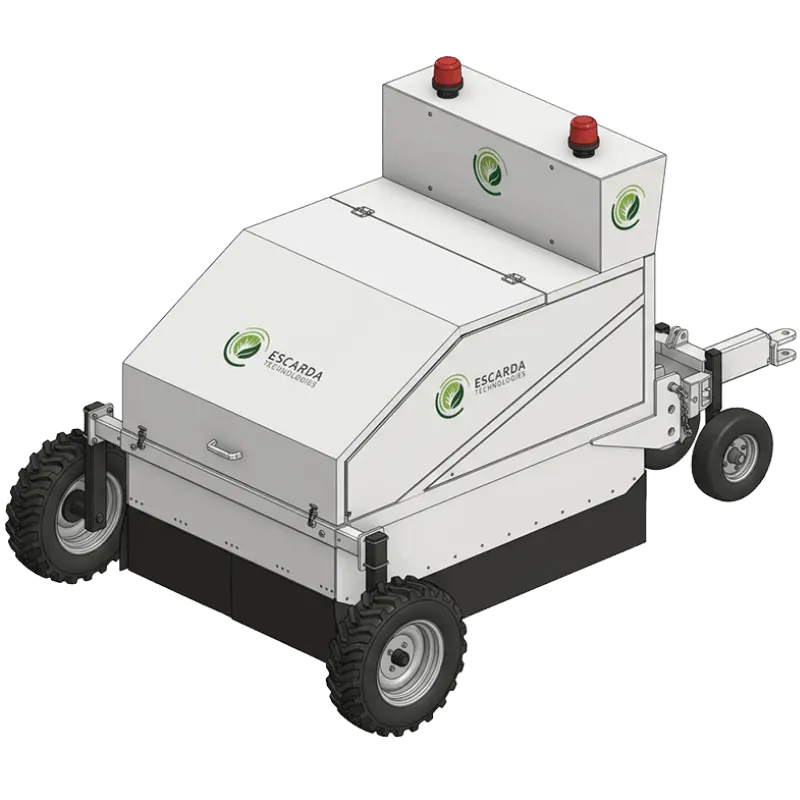
- ✓Modular plug-and-play design for easy maintenance
- ✓Quick laser box replacement in field
- ✓Already some dealer network (Stecomat FR, Homburg NL)
- ✓Partnership with major US tomato grower (Morningstar)
- ✓Competitive mid-range pricing
- ✓Lightweight compared to leader
- ✓Associated to an industrial laser company
- ⚠Certification delays impacted market entry
- ⚠Limited funding (<1M€ raised)
- ⚠Fewer than 5 units deployed
- ⚠Difficulty to develop new crops AI model
- ⚠Dependent on dealer network for sales
- ⚠Unproven long-term reliability
- ⚠Struggling to fully deliver first units
Lumina
Weedbot
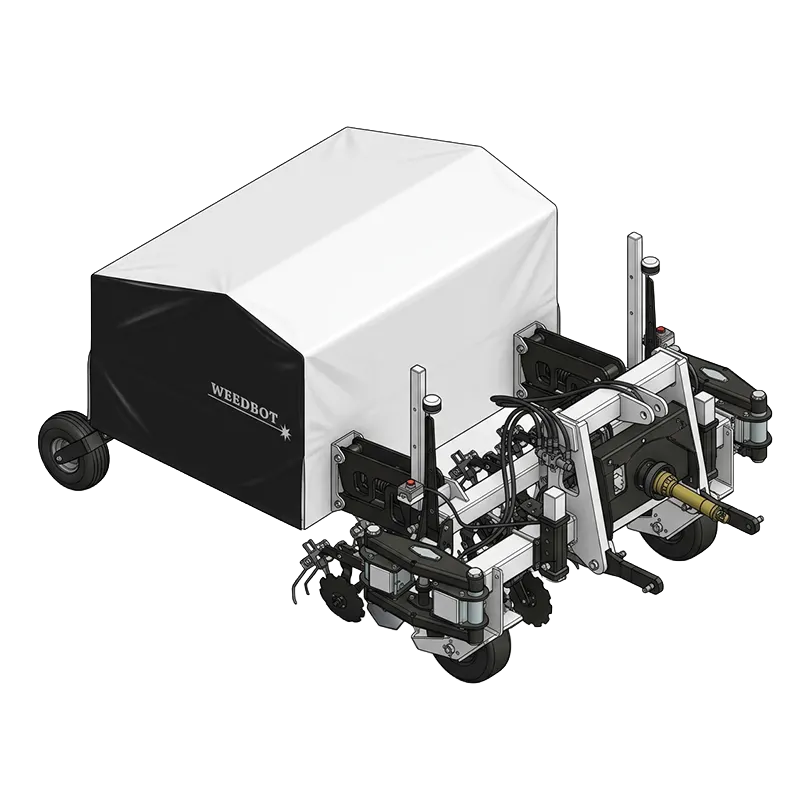
- ✓One of the leader's first competitors
- ✓Lighter weight than leader
- ✓Direct sales with local EU support
- ✓One machine in operation in Belgium
- ✓Good experience in carrots
- ⚠Partner KULT bankruptcy creates uncertainty
- ⚠Blue light diode laser are efficient but dangerous for the retina
- ⚠Very few information about the technology and prices
- ⚠Very limited crop support (mainly carrots)
- ⚠Unproven reliability and performance
- ⚠Limited technical specifications available
- ⚠Small company with uncertain future
Robot One
PixelFarming
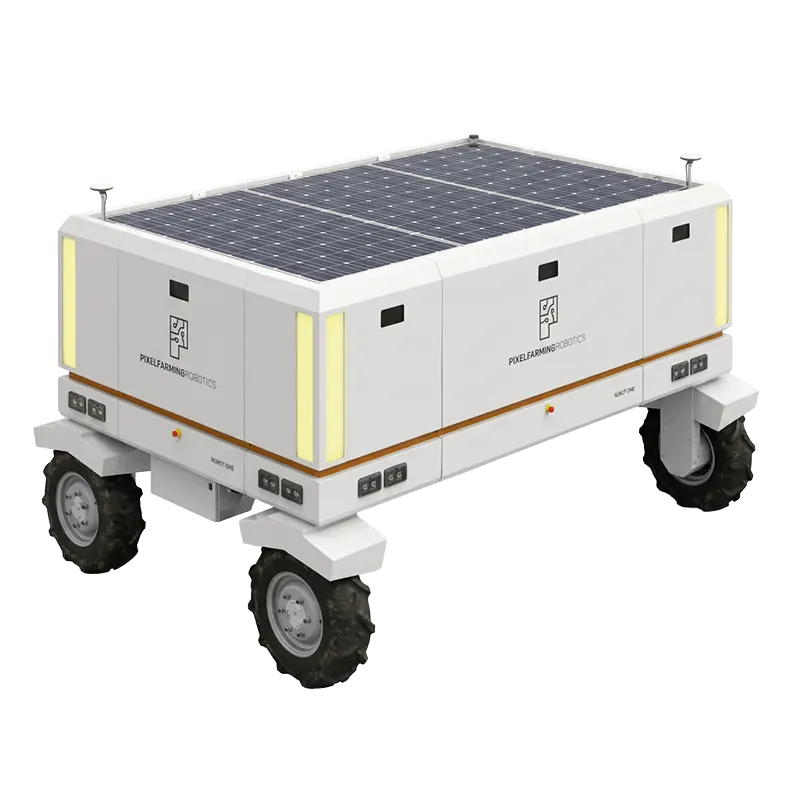
- ✓Fully autonomous operation (no tractor needed)
- ✓Broad crop support (6 crop types)
- ✓Scalable platform (2m and 5m versions)
- ✓No operator required during operation
- ✓Future-proof autonomous technology
- ✓Lower operationnal costs because fully electrified
- ⚠CO2 Laser technology quickly loses effectiveness
- ⚠Lack of robots reliability and logistic constrains
- ⚠6m version still under development
- ⚠Fewer than 5 units deployed
- ⚠Higher upfront cost than implements
- ⚠Requires field infrastructure (charging, RTK base)
- ⚠Autonomy and robustness of electric vehicles
- ⚠Small company with uncertain future
Tor
Trabotyx
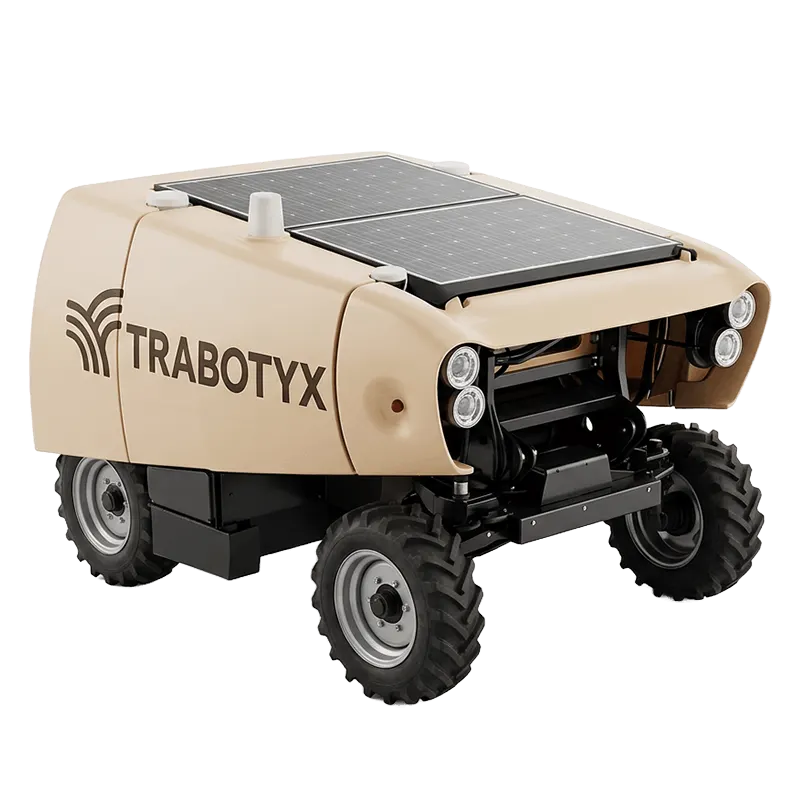
- ✓Attractive mid-range pricing (€214-349k)
- ✓Fully autonomous operation (no tractor needed)
- ✓Close to Dutch market (local support)
- ✓Modular system with multiple widths
- ✓Pro 3m version for larger operations
- ✓Good automation capabilities
- ✓Lower operationnal costs because fully electrified
- ⚠Blue light diode laser are efficient but dangerous for the retina
- ⚠Requires field infrastructure (charging, RTK base)
- ⚠Autonomy and robustness of electric vehicles
- ⚠Still in validation phase (not fully commercial)
- ⚠Fewer than 5 units deployed
- ⚠Lack of robots reliability and logistic constrains
- ⚠Higher upfront cost than implements
- ⚠Small company with uncertain future
L&Aser™ Module
L&A
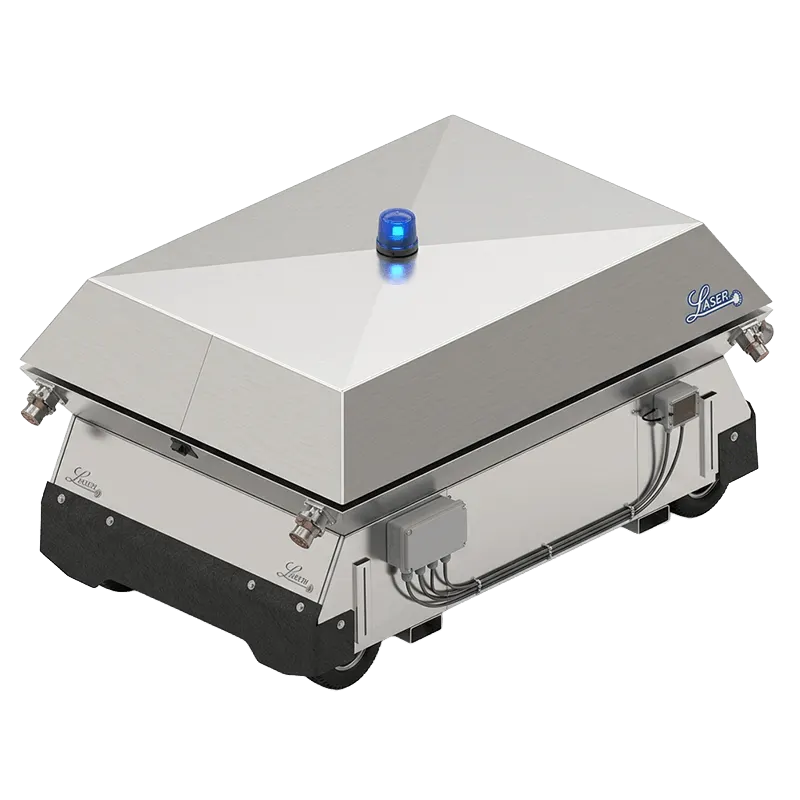
- ✓Bootstrapped company
- ✓Open-source laser (Apr 2025)
- ✓Official and clear price displayed
- ✓All information available on the website
- ✓Possibility to buy the laser boxes directly online
- ⚠Blue light diode laser are efficient but dangerous for the retina
- ⚠Lawsuit by leader in Oct 2024, Capital challenges
- ⚠Expatriate company in Australia
- ⚠Not allowed to sell product in USA
- ⚠Some doubts about the ability to provide after-sales service
What is Laser Weeding?
Laser weeding is a precision agricultural technology that uses high-powered lasers and AI to eliminate weeds without herbicides. Computer vision identifies individual weeds in real-time; a focused laser pulse then destroys the meristem (growing point) within milliseconds — killing the weed while leaving crops untouched.

Millimeter Precision
AI detects and targets weeds as small as 2mm without damaging crops
Chemical-Free
Zero herbicides, safe for organic farming and the environment
High Throughput
Systems eliminate up to 100,000 weeds per hour at speeds up to 1 mph (1.5 km/h)
How Does Laser Weeding Work?
A laser weeding system mounts to a tractor or operates autonomously and continuously scans the crop row with cameras. An AI model — trained on millions of labeled plant images — identifies each weed within milliseconds. The system then aims a focused high-powered laser (typically 20–240W) at the weed's meristem, the growing point located just below the soil surface. The laser destroys the meristem cells through heat, preventing regrowth without disturbing the soil or leaving any chemical residue.
How Effective is Laser Weeding?
Commercial systems achieve up to 99% weed kill rates in field conditions. Leading implementations can eliminate up to 100,000 weeds per hour at field speeds up to 1 mph (1.5 km/h). Peer-reviewed studies confirm that meristem targeting suppresses regrowth effectively across 100+ crop species. Farmers report 60–80% reductions in herbicide costs and comparable or better weed control vs. conventional chemical programs.
Laser Weeding vs. Herbicides
Laser weeding offers several structural advantages over herbicide-based weed control:
- ✓No chemical residue — eligible for organic certification
- ✓No herbicide resistance development — weeds cannot adapt to laser heat
- ✓No soil disruption — preserves soil microbiome and structure
- ✓Operational 24/7 including night — not weather-limited like spraying
- ✓No re-entry intervals — tractors can enter fields immediately
Trade-off: higher upfront capital cost ($150k–$1.5M) vs. ongoing herbicide spend of ~$50–200/acre/year.
See Laser Weeding in Action
Laser Technology Comparison
General technology comparison: Blue diode, CO2, and classic diode lasers.
| Criterion | Blue Diode (~445-465 nm) | CO2 (~10 600 nm) | Classic Diode (~650-915 nm) |
|---|---|---|---|
| Weed control effectiveness | ✅ Very high (optimal absorption by plant tissue) | ✅ Very high (absorbed by water in plants) | ⚠️ Variable, less effective → may require higher power |
| Energy efficiency | ✅ Very good (30–40%+) | ❌ Low (~10–20%) | ✅ Good, similar to blue diode |
| Robot / mobile compatibility | ✅ Excellent (compact, easy to integrate) | ❌ Poor (bulky, heavy cooling system) | ✅ Very good (compact, reliable) |
| Robustness / lifespan | ✅ Good, few moving parts | ✅ Very stable but sensitive to vibrations | ✅ Excellent, mature technology |
| Eye safety | ⚠️ High retinal risk, even diffuse reflection can cause damage | ⚠️ Invisible beam, absorbed by cornea → still serious risk | ❌ Retinal risk in direct vision, or by reflection |
| Cost / availability | ⚠️ More expensive than red, but accessible | ❌ Very expensive, rare | ✅ Low cost, widely available |
| Cooling / maintenance | ✅ Simple | ❌ Complex, often requires active cooling | ✅ Simple and reliable |
How to Choose a Laser Weeder
Implement vs. Robot
Tractor-mounted implements (Carbon Robotics, Escarda, WeedBot, Trabotyx) suit existing fleets and controlled row spacing. Autonomous robots (PixelFarming, Earth Rover) offer hands-free weeding but are earlier stage. Laser-only suppliers (Luxeed, L&A) target OEMs and custom builds.
- ✓Implements: Carbon, Escarda, WeedBot, Trabotyx
- ✓Robots: PixelFarming, Earth Rover
- ✓Laser suppliers: Luxeed, L&A
Total Cost of Ownership
Factor in upfront machine cost, annual subscription (where applicable), and width/productivity. Carbon leads at premium price and scale; EU options like Escarda and Trabotyx offer lower entry points.
Cost Comparison
Upfront and subscription pricing (indicative)
| System | Hardware / Price | Subscription |
|---|---|---|
Carbon Robotics G2 600 Commercial 2018 | Around 1,500,000€ | 60k-100k€/year |
Carbon Robotics G2 200 Commercial 2021 | Around 600,000€ | 40k-60k€/year |
Terra Robotics Terracore Commercial 2025 | Around 300K€ | Subscription (No info) |
Escarda Flex System Commercial 2025 | Around 300k€ | Suscription (No info) |
Weedbot Lumina Commercial 2025 | Around 300 – 350k€ | Suscription (No info) |
PixelFarming Robot One First Pilots 2025 | Around $355k | Subscription (No info) |
Trabotyx Tor First Pilot 2026 | Around 300k€ | 20.9k€/year |
L&A L&Aser™ Module Commercial 2026 | Around 20k€ per laser box | — |
Real-World Results
Hear from farmers who have integrated laser weeding into their operations and achieved measurable ROI.
Tripod Farmers
Australia's leading salad company
"We have implemented the LaserWeeder on a New Holland tractor T7.210 with 165 horsepower. In 5 hours of use, we have weeded 5 acres and eliminated 800,000 weeds. We have been using this weeder in different types of lettuce, kale, red and green corals, bottle lettuce and it's been working very good!"
Vezyroglou Farm
Greece's leader in high-quality leafy greens (100 ha/year)
"The TerraWeeder CORE proved its value within the first month. After few weeks our operators were already used to the machine. At Vezyroglou Farm, three crops were added in one month, leading to a 50–70% reduction in weeds and, in some areas, the complete elimination of manual labor."
Braga Fresh
Californian family business, Salinas Valley
"We were among the first to invest in a Carbon Robotics V1 machine. Despite its high upfront cost, we were able to fully recoup the investment within two years by using it year-round across more than 500 hectares. Today, this technology allows us to diversify our operation: like introducing carrots, a crop that were not viable before acquiring the machine."
Two Decades of Laser Weeding Research
From foundational biology studies to commercial field trials, explore the key scientific breakthroughs that transformed laser weeding from laboratory curiosity to viable agricultural technology. Click on any year to dive into the research.
Key Research Insights
Open-Source Laser Weeding Projects
For developers, researchers, and technologists interested in building their own laser weeding systems or contributing to the field. These repositories provide code, datasets, and frameworks for various components of laser weeding technology.
L&ASER
Product-levelLaudando-Associates-LLC
Open-source releases for the "L&ASER" laser weeder project (dual-licensed). Provides core project components of a laser weeding system — perception/control modules rather than a complete DIY build.
View on GitHub →WeedStemDetection
AI/Perceptionopen-sciencelab (AAAI 2025)
Research code for weed stem detection designed specifically for intelligent laser weeding. Detects the precise weed stem location so a laser can accurately burn/cut the plant at the optimal point.
View on GitHub →Open-Weeding-Delta
Full StackAgroecology-Lab
A ROS2-based autonomous weed removal robot project. Provides a complete robotics framework that performs weed detection/segmentation and triggers actuators (mechanical or laser).
View on GitHub →Project-Cyclops
Platform-specificrahularepaka
A laser attachment for FarmBot Genesis (v1.3). Turns a FarmBot into a laser weed removal prototype with a 500 mW laser module. Platform-specific proof-of-concept for integrated perception + laser actuation.
View on GitHub →OpenWeedLocator
Entry-levelgeezacoleman
An open-source weed detection system (Raspberry Pi-based). Detects weeds (green-on-brown scenarios) and triggers an external device. Not laser-specific, but could trigger a laser driver instead of a spray solenoid.
View on GitHub →robot-weed-killer
Control LayerSalisbury-University
A control application for a laser-firing weed-killing robot. Coordinates movement and triggers the laser — primarily the control/actuation layer rather than a machine learning project.
View on GitHub →OpenSourceAgriculture
Resource Indexgeezacoleman
A curated list of open-source agriculture projects and datasets. Helps discover additional robotics, precision agriculture, and weed-related repositories. Not an actual weeding system, but a valuable discovery resource.
View on GitHub →Frequently Asked Questions
Who is the market leader in laser weeding?
Carbon Robotics is the established leader with commercial sales since 2021, ~200 units globally (NA, EU, Australia), and a broad G2 range from 2 m to 18 m. Terra Robotics and Escarda Technologies are strong challengers in the EU.
Which crops are supported?
Carbon Robotics supports 150+ crops including specialty vegetables, herbs, and organic corn & soybeans. EU-focused systems often target onions, carrots, sugar beet, spinach, tomatoes, and leafy greens. Check each vendor for your crop.
Implement vs. autonomous robot?
Implements (tractor-mounted) are commercially available from Carbon, Escarda, WeedBot, and Trabotyx. Full autonomous robots (e.g. PixelFarming Robotics, Earth Rover) are in validation or early commercial stage. Choose implements for proven throughput and existing tractors; robots for future autonomy.
What different technologies are used in laser weeding?
Laser weeding systems combine several technologies: high-powered CO2 or diode lasers (typically 20-150W per laser), AI-powered computer vision for weed detection, real-time image processing, precision targeting systems, and GPS/RTK navigation. Some systems use thermal imaging to verify weed elimination. The key innovation is the AI that distinguishes crops from weeds in milliseconds.
What does laser weeding cost?
Upfront costs range from EUR150k-200k for entry-level 2m implements (Terra Robotics, Escarda, WeedBot) to USD500k+ for premium systems like Carbon Robotics' 6m G2. Many systems require annual subscriptions (USD50k-120k for Carbon). Calculate 2-4 year ROI depending on farm size, crop value, and labor costs. Use our ROI calculator above for your specific scenario.
How safe are laser weeding systems?
Modern laser weeding systems include multiple safety features: enclosed laser housings, automatic shutoff when covers are opened, emergency stop buttons, and safety interlocks. The lasers are directed downward at the soil and are enclosed within protective shrouds. Operators should follow manufacturer safety protocols and wear appropriate eye protection when servicing the equipment.
Can laser weeding work in all weather conditions?
Laser weeding works best in dry conditions. Heavy rain, fog, or excessive dust can reduce effectiveness as they interfere with the laser beam and camera vision systems. Most systems can operate in light moisture but are not recommended during heavy rain. Night operation is possible with proper lighting for the vision system. Wind generally doesn't affect performance.
What maintenance do laser weeding systems require?
Regular maintenance includes cleaning camera lenses and laser optics (daily in dusty conditions), checking laser alignment, inspecting electrical connections, and updating software. Laser modules typically last 10,000+ hours but may need replacement over time. Most manufacturers offer service contracts and remote diagnostics. Budget 5-10% of purchase price annually for maintenance and support.
Ready to explore laser weeding?
Tell us about your farm and we'll connect you with the right laser weeding solution - free, no-obligation expert advice.
Get expert advice
Our team will help you find the right laser weeding system for your farm.